Physician finance
You Passed Go Again. Now What?
A viral Monopoly meme, a board game from 1904, and the question most high earners never ask their paycheck.
Haseeb Aslam, MD8 min read
You passed Go again. Now what?
Now the reason.
A meme makes the rounds every few months. You've probably scrolled past it, and maybe you even felt a little seen:
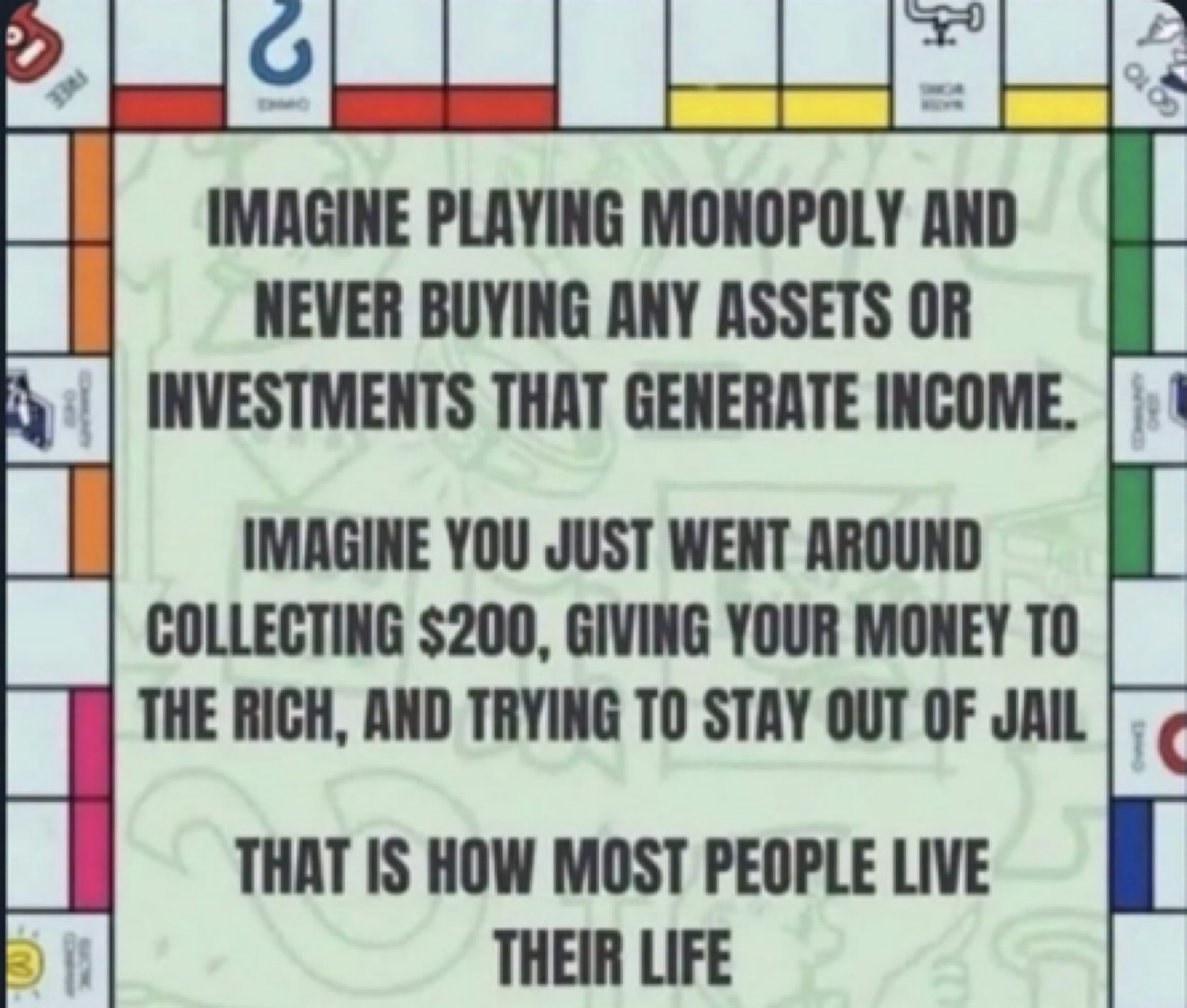
The pitch is simple. Imagine playing Monopoly and never buying anything. You circle the board, collect $200, pay rent to the people with hotels, and try to stay out of jail. That, it says, is how most people live their life.
It gets shared a lot, usually by people with an index fund and strong opinions. It lands because it's mostly true. But it's wrong in a few interesting ways, and the wrong parts turn out to be more useful than the right ones.
The $200 problem
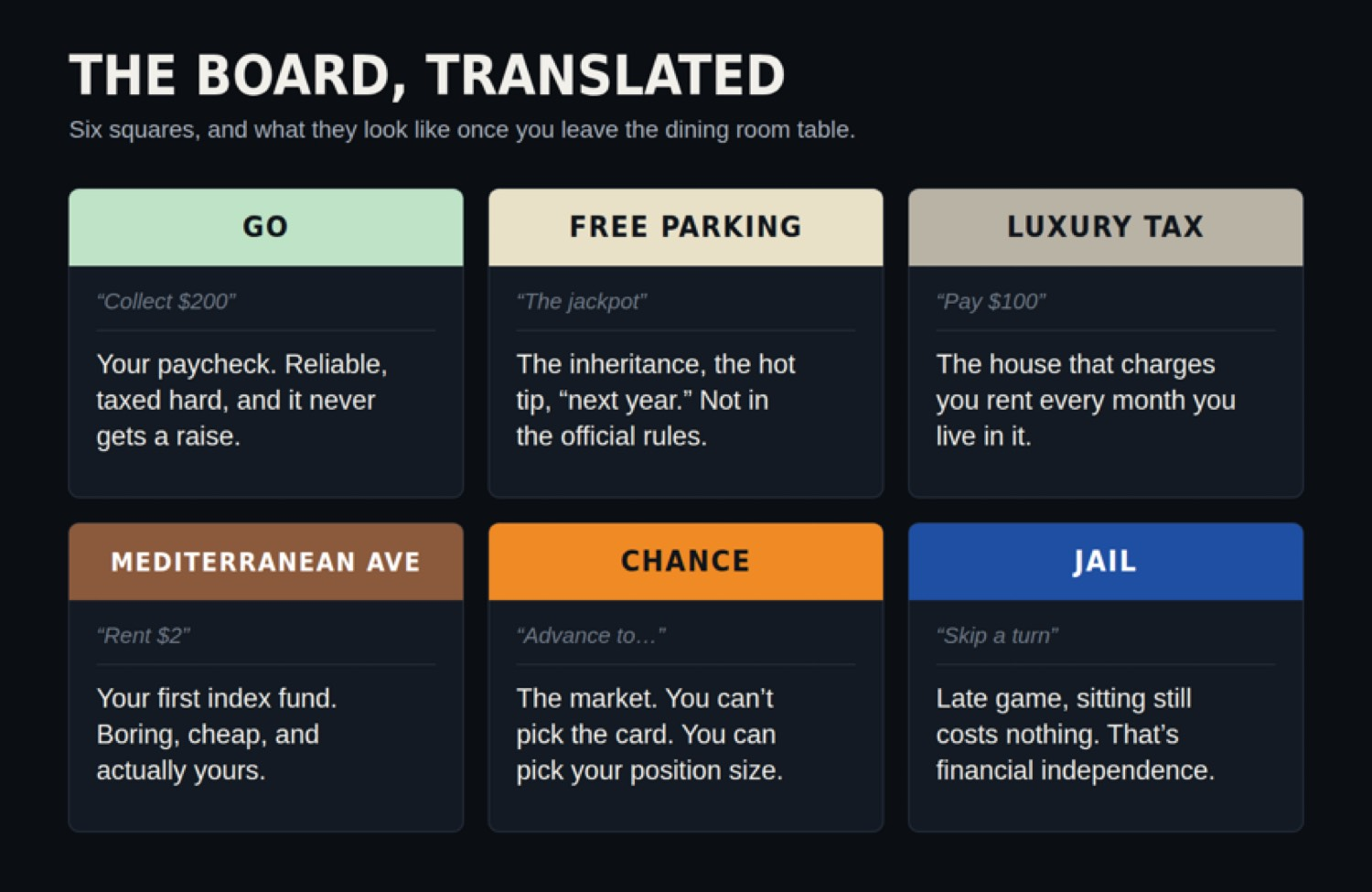
Passing Go is the only money in Monopoly that shows up without you owning anything. It's a salary. It's predictable, it never gets a raise, and while you're collecting it, everyone else is building hotels and quietly raising the price of landing on their side of the board.
Your paycheck is your Go square. Mine arrives every two weeks whether or not I did anything clever with the last one. There's nothing wrong with that. The problem starts when Go is the entire strategy, and it's worse than it looks, because the $200 is also the most heavily taxed money you will ever earn. The game gives you your salary in full. The IRS is less sporting.
Physicians get a special version of this. Our Go square pays more, so it takes longer to notice we're just circling. I know colleagues in their fifties who have passed Go a few thousand times and still own nothing that pays them on a day they don't show up. A bigger salary makes the laps more comfortable. It doesn't make them go anywhere.
Free Parking isn't in the rules
Read the official rules sometime. Free Parking pays nothing. That pile of cash in the middle of the board is a house rule families invented because everyone wanted a jackpot.
Real life has its own Free Parking. The inheritance. The attending salary that will finally fix things. The coin your cousin keeps texting you about. The year you'll finally get serious. A lot of smart people are quietly counting on one of these, and none of them are in the rulebook.
Your house is not a green house
In Monopoly, a house makes money. Put one on Park Place and other people pay you.
The house most of us buy in real life works in reverse. It collects rent from you: property tax, insurance, the roof, the AC unit that dies every July like it has a calendar reminder. It may be a wonderful place to raise kids, and it may go up in value. But if it takes money out of your pocket every month, it has more in common with Luxury Tax than with Boardwalk.
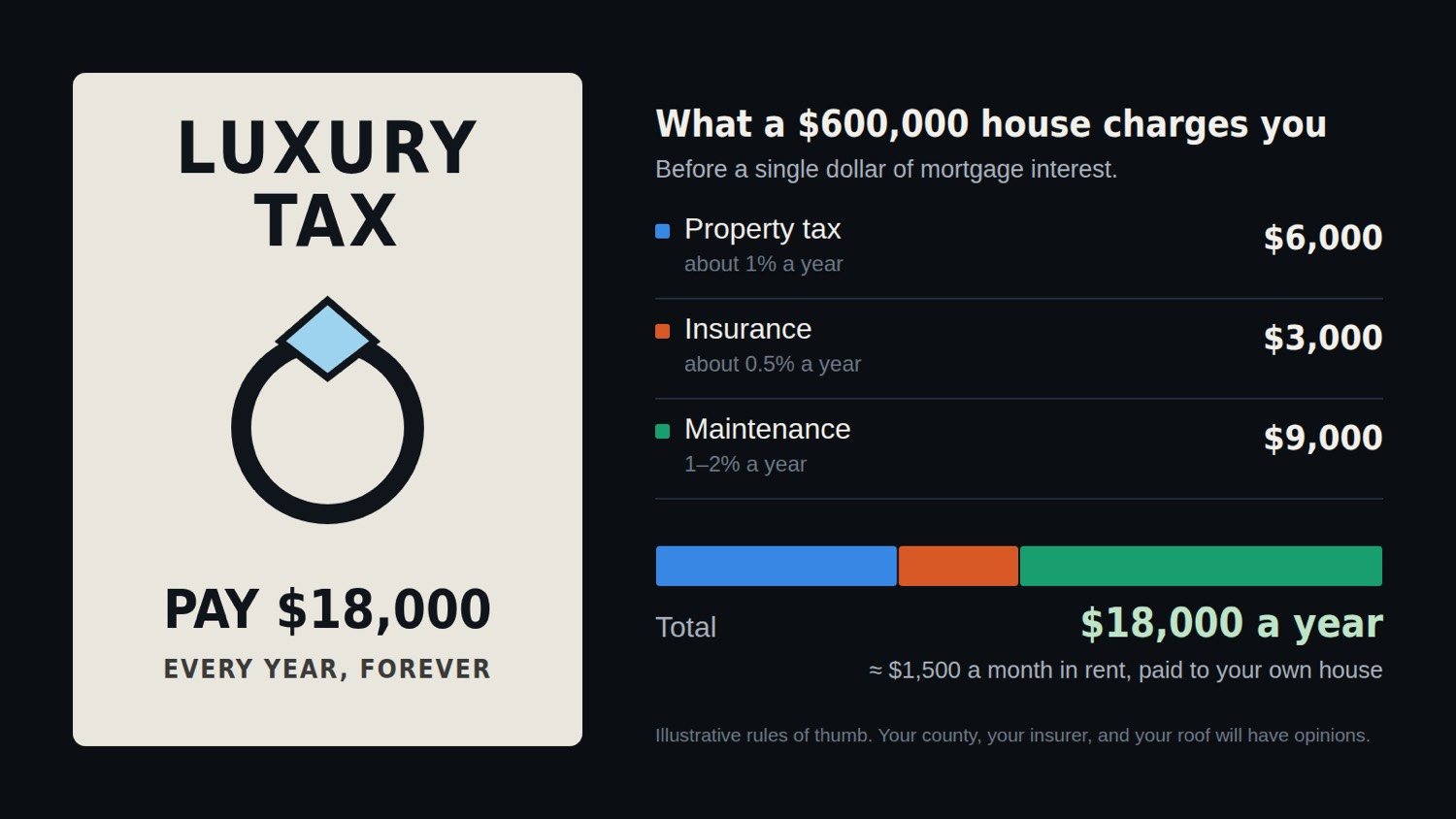
Count it honestly. Then decide how much of it you actually want.
The part the meme leaves out
Monopoly started life as The Landlord's Game, patented by Lizzie Magie in 1904. She built it as a protest. The point was to show how rent piles wealth up until one player owns everything and everyone else goes broke. She wanted people to leave the table uneasy.
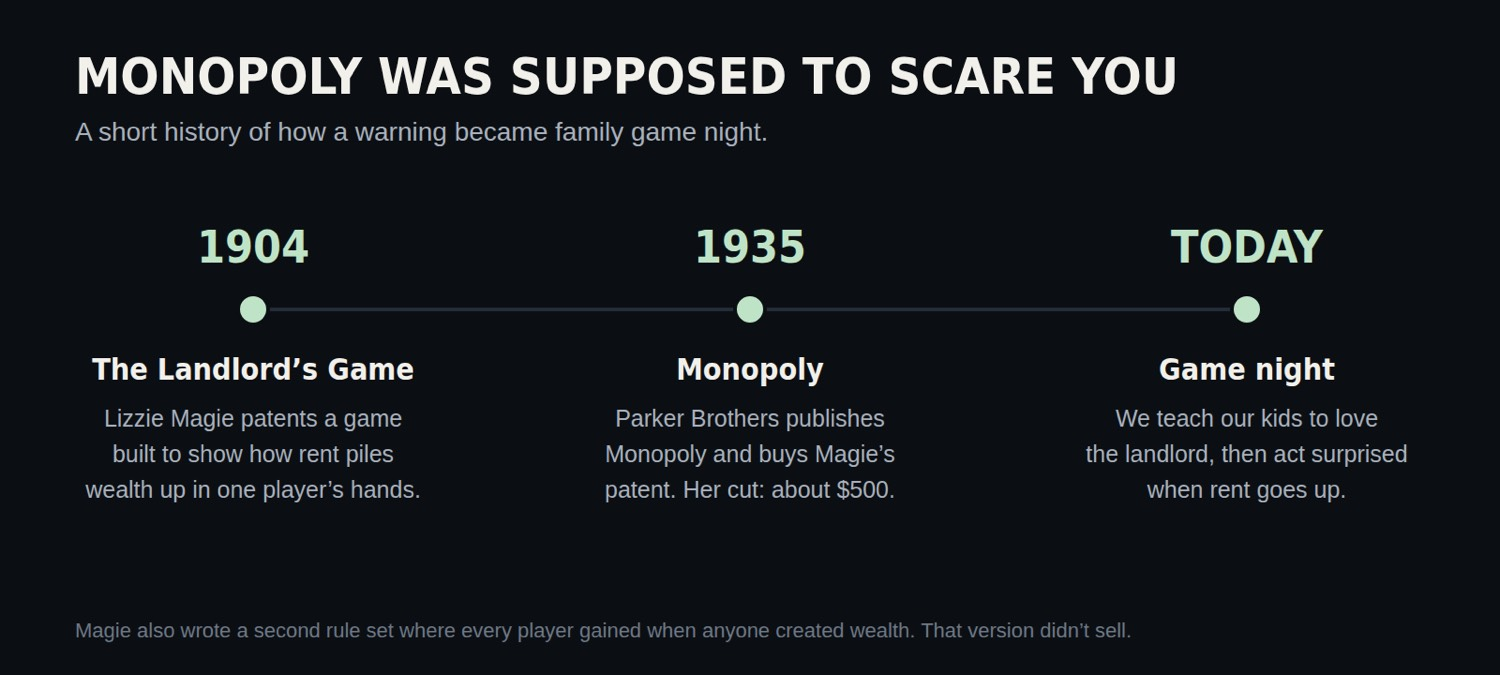
We turned it into family game night and taught our kids to cheer for the landlord. I find that funny and a little bleak.
It also exposes the real flaw in the game. Monopoly is zero-sum. For you to win, your sister has to go bankrupt, which explains a lot about Thanksgiving. Real investing mostly isn't built that way. When you buy a slice of a company, nobody gets evicted. You share in what the company builds. You can own part of the board without ruining the holidays.
In fairness to the people still circling, some of them can't afford Baltic Avenue, and the meme is a little smug about that. But if you're reading a site called The Margin Doc, odds are you can afford something purple.
Start with the cheap properties
Mediterranean Avenue rents for two dollars. Nobody brags about owning it. It still counts, because it's yours and it pays.
The real-world versions are just as unglamorous: a broad index fund, a dividend stock, a small rental, a side business that runs without you some weeks. If you already own shares, there's an even more literal version. You can sell someone the right to maybe buy them from you later and collect a payment today, whether or not they ever do. That's rent, on a stock. Once that clicked for me, it turned into a whole book, The Premium Collector, and a beginner's version with a title I still like, Selling Options Without Losing Your Shirt.
Two warnings from someone who learned them the expensive way. First, the rent looks bigger than it is if you do the math like a lottery winner; annualized return is the number most option sellers get wrong. Second, don't buy property just because it's for sale. Check whether the board agrees with you before you collect. That's what the scanner on this site is for.
About jail
The meme treats jail as the square to avoid. Experienced players know better. Late in the game, once they own enough property, they want to sit in jail. They skip their turns, stay off everyone else's hotels, and keep collecting rent the whole time.
That's financial independence, more or less. It's the point where sitting still stops hurting, because the board is paying you either way.
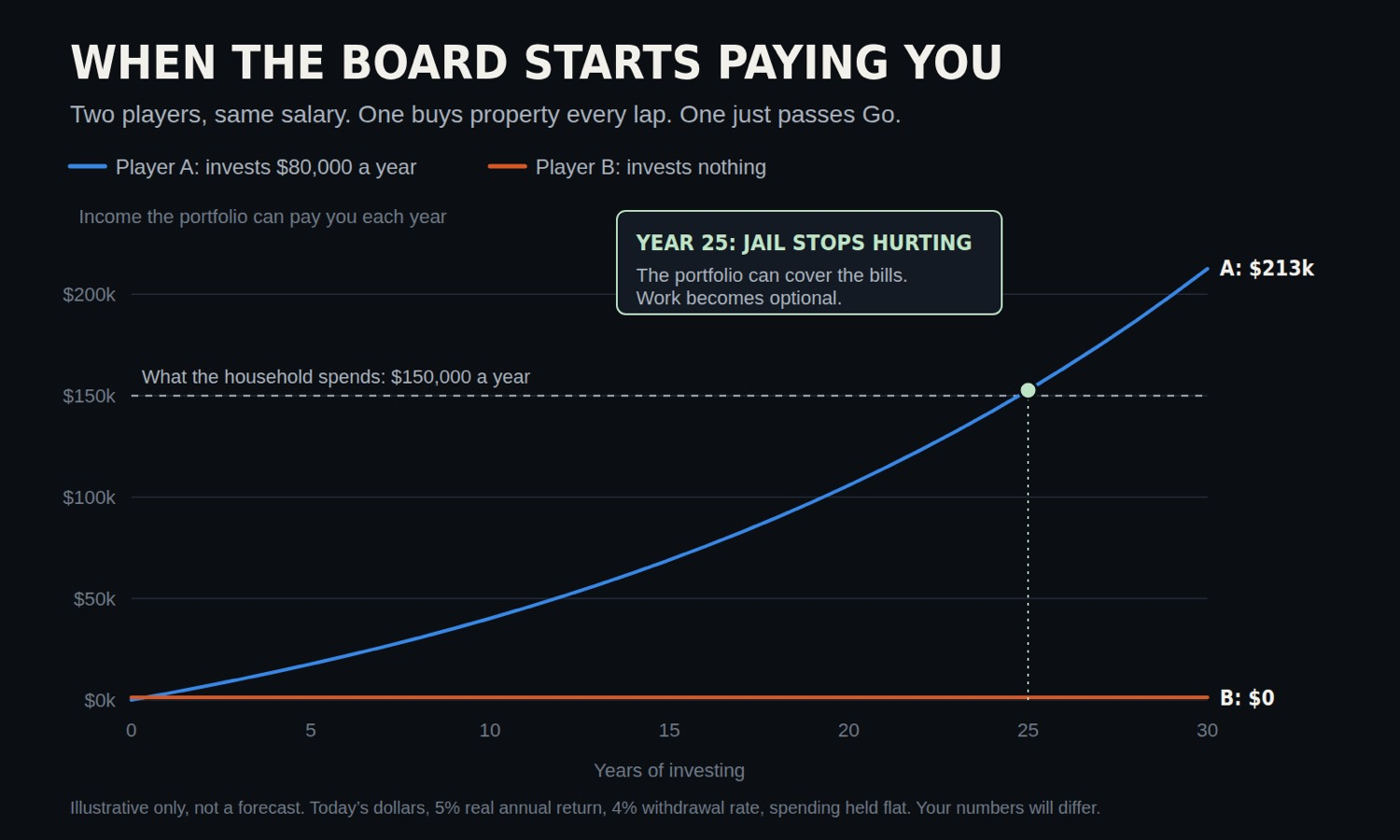
The line doesn't look like much for the first decade. That's the part where most people quit buying property and start buying boats. Stay with it and the curve does the heavy lifting on the back half.
The finish line has a name: your freedom number. It's usually smaller than people fear, for reasons I lay out in your freedom number is smaller than you think. The longer version, and the one I'd hand a colleague who just signed their first attending contract, is Practice by Choice, which is about making work optional rather than escaping it. If you want the physician-specific roadmap, The Freedom Prescription picks up from there.
Your next lap
The meme ends by telling you this is how most people live their life. Fair enough. Nobody's making you keep rolling the same way, though.
For most of us, the next trip past Go is about two weeks out. This time, buy something. Even something purple.
If you'd like the whole shelf, the books are here. They're shorter than a Monopoly game and considerably less likely to end a friendship.
Related
Questions or pushback? Write to hello@themargindoc.com. I read everything. I can't give individual medical or financial advice, but I answer the general version of good questions in future posts.
New posts
Subscribe by RSS, or write to hello@themargindoc.com.
Follow along
Educational only. Not financial, tax, or legal advice. Not a recommendation to buy or sell any security. The charts use illustrative assumptions, not forecasts. Monopoly is a trademark of Hasbro; this post isn't affiliated with or endorsed by Hasbro. Disclosures.